Har darwaza lakri ka nahin hota kuch darwaze rehmat ke hote hain.
Kabhi tel ki dukaan par tel gira hua milta hai,
naai ki dukaan par baal bikhre hote hain;
magar sunaar sona farsh par nahin chhorta,
jauhari heere jawahir be-hifazat nahin rakhta,
aur bank mein qeemti raqam yun nahin bikhri rehti.
Jis cheez ki qadr hoti hai, use sambhaal kar rakha jata hai.
Phir dil poochhta hai: Allah wale itni badi roohani daulat ke bawajood khud ko itna mamooli kyun rakhte hain? Kyun unke darwaze aalim-o-awam, khawas-o-aam, bade-o-chhote, hatta ke gunahgaaron ke liye bhi khule rehte hain?
Allah ke liye kahin bhi chale jaate hain.
؎ Kabhi Arsh par, kabhi Farsh par
Kabhi un ke dar, kabhi dar-badar
Gham-e-aashiqi tera shukriya
Hum kahan kahan se guzar gaye
Is ka jawab mujhe kisi kitaab se zyada apne Sheikh-o-Murshid Hazrat Syed Muhammad Talha Sahib Naqshbandi Mujaddidi Damat Barakatuhum ki sohbat mein nazar aaya.
Main ne un ki zindagi mein woh saadgi dekhi hai jahan jitni nisbat, utni aajizi; jitna ilm, utni tawazu; jitne logon ke uyoob ka ilm, utni hi pardah-poshi.
Hazaaron logon ke aib seene mein hon, magar zabaan par na aayen; hazaaron logon ki kamzoriyan maloom hon, magar kabhi un ki izzat majrooh na ho; koi gunah lekar aaye to use maazi mein dafan na kiya jaye, balke mohabbat se Allah ki taraf lautne ka raasta dikhaya jaye.
Kya ulama, kya awam, kya khawas, kya gunahgaar, kya bade, kya bachche—har ek ke liye rehmat ka darwaza khula rahe; yahi woh manzar hai jise main ne apne Sheikh ki sohbat mein baarha dekha hai.
⸻
🌿 Allah walon ki asal pehchan
Allah Ta‘ala ne apne Awliya ki pehchan shohrat, libaas ya dunyawi maqam se nahin, balke imaan aur taqwa se batayi:
Tarjuma:
“Aagah ho jao! Beshak Allah ke doston par na koi khauf hai aur na woh ghamgeen honge. Yeh woh log hain jo imaan laaye aur taqwa ikhtiyar karte rahe.”
(Surah Yunus: 62-63)
Yani asal daulat imaan-o-taqwa hai; aur haqeeqi bulandi woh hai jo insaan ko Allah ke saamne jhuka de.
⸻
🌿 Duniya ki nazar mein mamooli, Allah ke nazdeek qeemti
Tarjuma:
“Kitne hi aise bikhre baalon wale, ghubaar-aalood aur logon ke darwazon se dhutkaare hue bande hain ke agar woh Allah ke bharose par qasam kha baithen to Allah Ta‘ala un ki baat poori farma de.”
(Sahih Muslim, Hadees: 2622)
Jise duniya darwaze se wapas kar de, mumkin hai Allah ke nazdeek woh bahut qeemti ho.
Isi liye insaan ki qadr us ke libaas, daulat, gaadi, ohde ya shohrat se nahin; asal qadr us dil ki hai jo Allah ke saamne jhuka hua ho.
Tarjuma:
“Keh dijiye: Ae mere woh bando jinhon ne apni jaanon par zyadati ki hai! Allah ki rehmat se mayoos na hona, beshak Allah tamaam gunahon ko bakhsh deta hai. Beshak wohi bahut bakhshne wala, nihayat rahm farmane wala hai.”
(Surah Az-Zumar: 53)
Jab Allah Ta‘ala gunahgaar ko bhi “يَا عِبَادِيَ” keh kar pukarte hain, to Allah walon ka kaam bhi yahi hai ke gunah ko gunah samjhate hue gunahgaar ko Allah ki rehmat se mayoos na hone den.
⸻
🌿 Tawazu… azmat ki pehchan
Rasoolullah ﷺ ki zindagi mein bhi yahi tawazu nazar aati hai. Hazrat Aishah Raziyallahu ‘Anha farmati hain:
Tarjuma:
“Aap ﷺ apna kapra khud see lete, apni jooti khud marammat kar lete aur ghar mein woh kaam karte jo aam taur par aadmi apne ghar mein karta hai.”
(Musnad Ahmad, Hadees: 24903)
Bulandi yeh nahin ke insaan logon se upar baithe; bulandi yeh hai ke apne Rab ke saamne jhuk jaye aur makhlooq ke liye rehmat ban jaye.
Isi liye mere Sheikh ki sohbat mein main ne yeh kaifiyat mehsoos ki ke darwaza sab ke liye, dil sab ke liye, islaah sab ke liye aur rehmat sab ke liye.
⸻
🌿 Aakhir mein sirf itna…
Kabhi kisi Allah wale ko saada libaas mein dekh kar yeh na samajhna ke us ke paas kuch nahin.
Kabhi kisi aise shakhs ko mamooli samajh kar na guzar jaana jis ne tumhare aib jaan kar bhi tumhara haath nahin chhoda, tumhara maazi jaan kar bhi tumhein maazi mein qaid nahin kiya, aur tumhari kamzori jaan kar bhi tumhari izzat ka parda nahin chaak kiya.
Mumkin hai tumhein us ke dar par sirf ek aam sa insaan nazar aaye, magar Allah ne us ke dil mein imaan-o-taqwa ki woh daulat rakhi ho jis ki qeemat duniya ki koi daulat ada nahin kar sakti.
Aur shayad isi liye—
Har darwaza lakri ka nahin hota;
kuch darwaze rehmat ke hote hain.
ہر دروازہ لکڑی کا نہیں ہوتا کچھ دروازے رحمت کے ہوتے ہیں۔
کبھی تیل کی دکان پر تیل گرا ہوا ملتا ہے،
نائی کی دکان پر بال بکھرے ہوتے ہیں؛
مگر سنار سونا فرش پر نہیں چھوڑتا،
جوہری ہیرے جواہر بے حفاظت نہیں رکھتا،
اور بینک میں قیمتی رقم یوں نہیں بکھری رہتی۔
جس چیز کی قدر ہوتی ہے، اسے سنبھال کر رکھا جاتا ہے۔
پھر دل پوچھتا ہے: اللہ والے اتنی بڑی روحانی دولت کے باوجود خود کو اتنا معمولی کیوں رکھتے ہیں؟ کیوں ان کے دروازے عالم و عوام، خواص و عام، بڑے و چھوٹے، حتیٰ کہ گنہگاروں کے لیے بھی کھلے رہتے ہیں؟
اللہ کے لئے کہیں بھی چلے جاتے ہیں
؎ کبھی عرش پر، کبھی فرش پر
کبھی اُن کے در، کبھی در بدر
غمِ عاشقی تیرا شکریہ
ہم کہاں کہاں سے گزر گئے
اس کا جواب مجھے کسی کتاب سے زیادہ اپنے شیخ و مرشد حضرت سید محمد طلحہ صاحب نقشبندی مجددی دامت برکاتہم کی صحبت میں نظر آیا۔
میں نے ان کی زندگی میں وہ سادگی دیکھی ہے جہاں جتنی نسبت، اتنی عاجزی؛ جتنا علم، اتنی تواضع؛ جتنے لوگوں کے عیوب کا علم، اتنی ہی پردہ پوشی۔
ہزاروں لوگوں کے عیب سینے میں ہوں، مگر زبان پر نہ آئیں؛ ہزاروں لوگوں کی کمزوریاں معلوم ہوں، مگر کبھی ان کی عزت مجروح نہ ہو؛ کوئی گناہ لے کر آئے تو اسے ماضی میں دفن نہ کیا جائے، بلکہ محبت سے اللہ کی طرف لوٹنے کا راستہ دکھایا جائے۔
کیا عالم، کیا عوام، کیا خواص، کیا گنہگار، کیا بڑے، کیا بچے—ہر ایک کے لیے رحمت کا دروازہ کھلا رہے؛ یہی وہ منظر ہے جسے میں نے اپنے شیخ کی صحبت میں بارہا دیکھا ہے۔
⸻
🌿 اللہ والوں کی اصل پہچان
اللہ تعالیٰ نے اپنے اولیاء کی پہچان شہرت، لباس یا دنیاوی مقام سے نہیں، بلکہ ایمان اور تقویٰ سے بتائی:
ترجمہ:
“کتنے ہی ایسے بکھرے بالوں والے، غبار آلود اور لوگوں کے دروازوں سے دھتکارے ہوئے بندے ہیں کہ اگر وہ اللہ کے بھروسے پر قسم کھا بیٹھیں تو اللہ تعالیٰ ان کی بات پوری فرما دے۔”
(صحیح مسلم، حدیث: 2622)
جسے دنیا دروازے سے واپس کردے، ممکن ہے اللہ کے نزدیک وہ بہت قیمتی ہو۔
اسی لیے انسان کی قدر اس کے لباس، دولت، گاڑی، عہدے یا شہرت سے نہیں؛ اصل قدر اس دل کی ہے جو اللہ کے سامنے جھکا ہوا ہو۔
ترجمہ:
“کہہ دیجیے: اے میرے وہ بندو جنہوں نے اپنی جانوں پر زیادتی کی ہے! اللہ کی رحمت سے مایوس نہ ہونا، بے شک اللہ تمام گناہوں کو بخش دیتا ہے۔ بے شک وہی بہت بخشنے والا، نہایت رحم فرمانے والا ہے۔”
(سورۃ الزمر: 53)
جب اللہ تعالیٰ گناہ گار کو بھی “يَا عِبَادِيَ” کہہ کر پکارتے ہیں، تو اہلِ اللہ کا کام بھی یہی ہے کہ گناہ کو گناہ سمجھاتے ہوئے گنہگار کو اللہ کی رحمت سے مایوس نہ ہونے دیں۔
⸻
🌿 تواضع… عظمت کی پہچان
رسول اللہ ﷺ کی زندگی میں بھی یہی تواضع نظر آتی ہے۔ حضرت عائشہ رضی اللہ عنہا فرماتی ہیں:
ترجمہ:
“آپ ﷺ اپنا کپڑا خود سی لیتے، اپنی جوتی خود مرمت کرلیتے اور گھر میں وہ کام کرتے جو عام طور پر آدمی اپنے گھر میں کرتا ہے۔”
(مسند أحمد، حدیث: 24903)
بلندی یہ نہیں کہ انسان لوگوں سے اوپر بیٹھے؛ بلندی یہ ہے کہ اپنے رب کے سامنے جھک جائے اور مخلوق کے لیے رحمت بن جائے۔
اسی لیے میرے شیخ کی صحبت میں میں نے یہ کیفیت محسوس کی کہ دروازہ سب کے لیے، دل سب کے لیے، اصلاح سب کے لیے اور رحمت سب کے لیے۔
⸻
🌿 آخر میں صرف اتنا…
کبھی کسی اللہ والے کو سادہ لباس میں دیکھ کر یہ نہ سمجھنا کہ اس کے پاس کچھ نہیں۔
کبھی کسی ایسے شخص کو معمولی سمجھ کر نہ گزر جانا جس نے تمہارے عیب جان کر بھی تمہارا ہاتھ نہیں چھوڑا، تمہارا ماضی جان کر بھی تمہیں ماضی میں قید نہیں کیا، اور تمہاری کمزوری جان کر بھی تمہاری عزت کا پردہ نہیں چاک کیا۔
ممکن ہے تمہیں اس کے در پر صرف ایک عام سا انسان نظر آئے، مگر اللہ نے اس کے دل میں ایمان و تقویٰ کی وہ دولت رکھی ہو جس کی قیمت دنیا کی کوئی دولت ادا نہیں کرسکتی۔
اور شاید اسی لیے—
ہر دروازہ لکڑی کا نہیں ہوتا؛
کچھ دروازے رحمت کے ہوتے ہیں۔
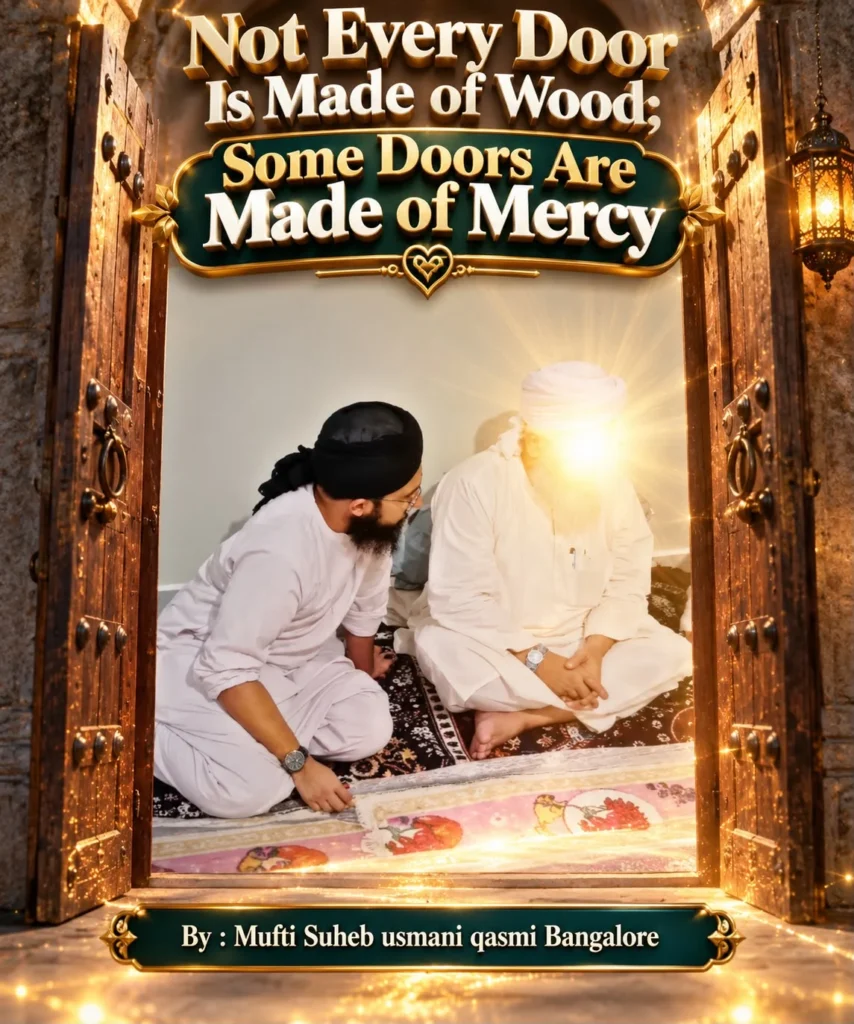
Not Every Door Is Made of Wood Some Doors Are Made of Mercy
Sometimes, when you pass by an oil shop, you see oil spilled on the floor.
At a barber’s shop, hair is scattered around.
But a goldsmith does not leave gold lying on the floor.
A jeweller does not leave diamonds and precious stones scattered carelessly.
And no bank leaves valuable money lying unprotected.
Whatever is truly valuable is carefully looked after.
Then a question quietly rises in the heart:
If the people of Allah carry such a great spiritual wealth within them, why do they still live so simply? Why are their doors open to scholars and ordinary people, to the special and the common, to the rich and the poor, to the young and the old—even to sinners?
For the sake of Allah, they are ready to go anywhere.
؎ Kabhi Arsh par, kabhi Farsh par
Kabhi un ke dar, kabhi dar-badar
Gham-e-aashiqi tera shukriya
Hum kahan kahan se guzar gaye
I understood the answer not only from books, but much more deeply through the company of my Sheikh and Murshid, Hazrat Syed Muhammad Talha Sahib Naqshbandi Mujaddidi Damat Barakatuhum.
In his life, I have seen a simplicity that carries its own greatness; the more spiritual connection, the more humility; the more knowledge, the more gentleness; and the more he knows about people’s weaknesses, the more he protects their honour.
There may be thousands of people whose faults are known to him, yet their names never become the subject of his tongue. He may know the weaknesses of thousands, yet never use those weaknesses to hurt their dignity. Someone may come carrying a life full of mistakes, but instead of burying him under his past, he is shown the way back to Allah with love.
Whether a scholar or an ordinary person, a special person or a common man, a sinner or a righteous person, rich or poor, young or old—the door of mercy remains open for everyone. This is something I have seen again and again in the company of my Sheikh.
⸻
🌿 The Real Sign of the People of Allah
Allah Ta‘ala did not describe His friends by their fame, clothes, wealth or position in the world. He described them through imaan and taqwa:
Translation:
“Listen carefully: surely the friends of Allah will have no fear upon them, nor will they grieve. They are those who believe and remain mindful of Allah.”
(Surah Yunus: 62-63)
So the real wealth is imaan and taqwa. And real greatness is that which makes a person bow before Allah.
⸻
🌿 Ordinary in the Eyes of the World, Precious in the Sight of Allah
Translation:
“There are many people with untidy hair, covered in dust, and turned away from people’s doors, who, if they were to take an oath by Allah, Allah would fulfil it.”
(Sahih Muslim, Hadith: 2622)
The person whom the world sends away from its doors may be extremely precious in the sight of Allah.
So do not measure a person by his clothes, his wealth, his car, his position or his fame.
Translation:
“Indeed, Allah loves the servant who is pious, independent of people, and keeps himself away from fame.”
(Sahih Muslim, Hadith: 2965)
Perhaps this is why the more the people of Allah grow in knowing their Lord, the smaller they feel themselves to be—and the greater they see their Lord.
⸻
🌿 To Know Someone’s Faults Yet Still Protect Their Honour
A person’s real greatness is not simply that he knows the faults of others.
Real greatness is to know their faults and still protect them.
Someone may come with a broken heart. Someone may carry the heavy burden of sins. Someone may come ashamed of his past—and instead of finding humiliation, he finds hope for repentance.
Translation:
“Say: O My servants who have wronged themselves, do not lose hope in the mercy of Allah. Surely Allah forgives all sins. Indeed, He is Most Forgiving, Most Merciful.”
(Surah Az-Zumar: 53)
When Allah Himself calls even a sinner “يَا عِبَادِيَ” — “O My servants,” then the people of Allah should also teach a sinner that his sin is wrong, but never allow him to lose hope in the mercy of Allah.
⸻
🌿 Humility Is a Sign of Greatness
The life of the Messenger of Allah ﷺ also shows this humility. Hazrat Aishah Raziyallahu ‘Anha said:
Translation:
“He would stitch his own clothes, repair his own shoes, and do the kind of work that men normally do in their homes.”
(Musnad Ahmad, Hadith: 24903)
Greatness does not mean sitting above people.
Greatness is to bow before your Lord and become a source of mercy for His creation.
That is why, in the company of my Sheikh, I have felt this quality again and again:
The door is open for everyone.
The heart has room for everyone.
The concern for reform is for everyone.
And the mercy is for everyone.
⸻
🌿 In the End, Just Remember This…
Never look at a simple person of Allah and think that he has nothing.
And never pass by someone as ordinary who has seen your faults yet never left your hand; who knows your past yet does not imprison you in it; who knows your weakness yet never tears away the curtain of your honour.
Perhaps, at his door, you may see only an ordinary human being. But Allah may have placed in his heart a wealth of imaan and taqwa whose value no worldly treasure can ever equal.
And perhaps that is why—
Not every door is made of wood;
some doors are made of mercy.
2 thoughts on “Not Every Door Is Made of Wood Some Doors Are Made of Mercy”
I was also blessed with the opportunity to meet Hazrat Maulana Sayyed Talha Saheb Qasmi Naqshbandi. By remaining in his blessed company, I had the privilege of learning many valuable things, and Allah blessed me with an increase in knowledge and understanding.
May Allah Almighty keep the blessed shadow of Hazrat Maulana Sayyed Talha Saheb Qasmi Naqshbandi over all of us, his disciples, for many years to come. May Allah grant him a long, healthy, and blessed life, and continue to benefit us through his knowledge, guidance, and prayers.
May Allah accept his efforts and bless him with endless goodness. Ameen Ya Rabbal Aalameen. 🤲❤️

Beshak 💯
I was also blessed with the opportunity to meet Hazrat Maulana Sayyed Talha Saheb Qasmi Naqshbandi. By remaining in his blessed company, I had the privilege of learning many valuable things, and Allah blessed me with an increase in knowledge and understanding.
May Allah Almighty keep the blessed shadow of Hazrat Maulana Sayyed Talha Saheb Qasmi Naqshbandi over all of us, his disciples, for many years to come. May Allah grant him a long, healthy, and blessed life, and continue to benefit us through his knowledge, guidance, and prayers.
May Allah accept his efforts and bless him with endless goodness. Ameen Ya Rabbal Aalameen. 🤲❤️